Problem
R&D teams often manage recipe versions, testing data, feedback, and approvals across disconnected workflows, making it difficult to track product development efficiently.
PROJECT OVERVIEW
An enterprise R&D platform designed to streamline recipe formulation, lab batch management, product testing, feedback, version control, and production approval.
R&D teams often manage recipe versions, testing data, feedback, and approvals across disconnected workflows, making it difficult to track product development efficiently.

Design a centralized platform that simplifies the complete R&D workflow while providing clear visibility into recipe status, testing progress, feedback, and approvals.


Before designing the platform, I analyzed the R&D product-development workflow and identified key challenges teams face while managing recipes, testing, feedback, and approvals.
Managing recipes across formulation, lab batches, testing, feedback, and approval can involve multiple disconnected steps, making the process difficult to track.
Teams need to track recipe versions, batch status, testing progress, and approvals across different stages of development.
Recipe data, test results, feedback, compliance details, and version changes can become difficult to find when information is spread across different workflows.
To understand the needs of different R&D stakeholders, I identified the primary user groups involved in recipe development and documented their goals and day-to-day requirements.

Responsible for developing recipes, managing formulations, and coordinating product iterations.

Evaluates product samples and provides structured feedback on taste, aroma, carbonation, and overall quality.

Reviews test results, compliance information, and recipe changes before approving a version for production.
Follow the complete R&D journey from creating a recipe to approving the final version for production.
Define recipe & ingredients
Build and refine recipe
Prepare lab batch
Evaluate product
Capture tester insights
Compare & improve versions
Review & approve
Release final recipe
The platform is organized into modular sections to simplify navigation, improve discoverability, and support the complete R&D workflow.
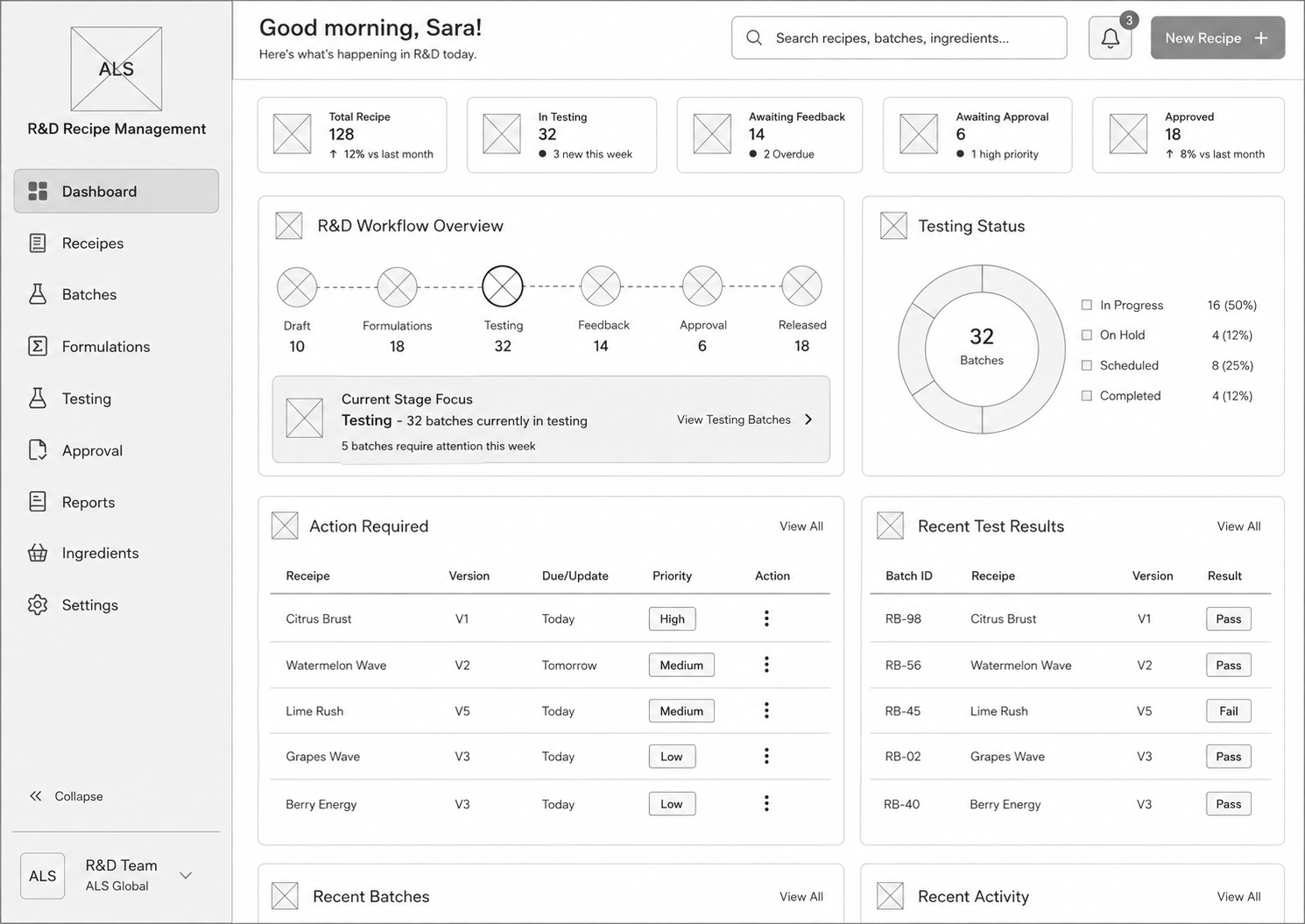
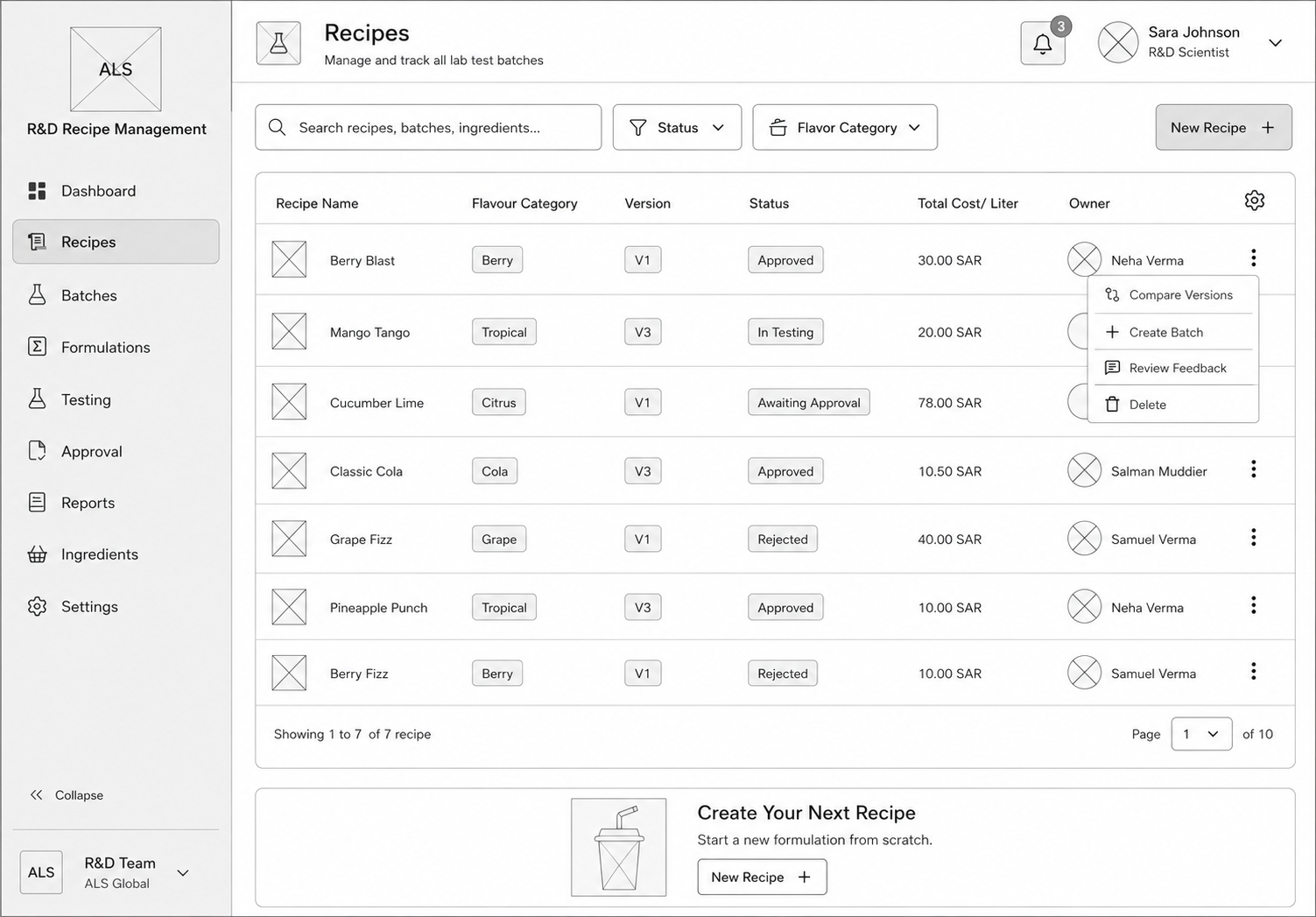
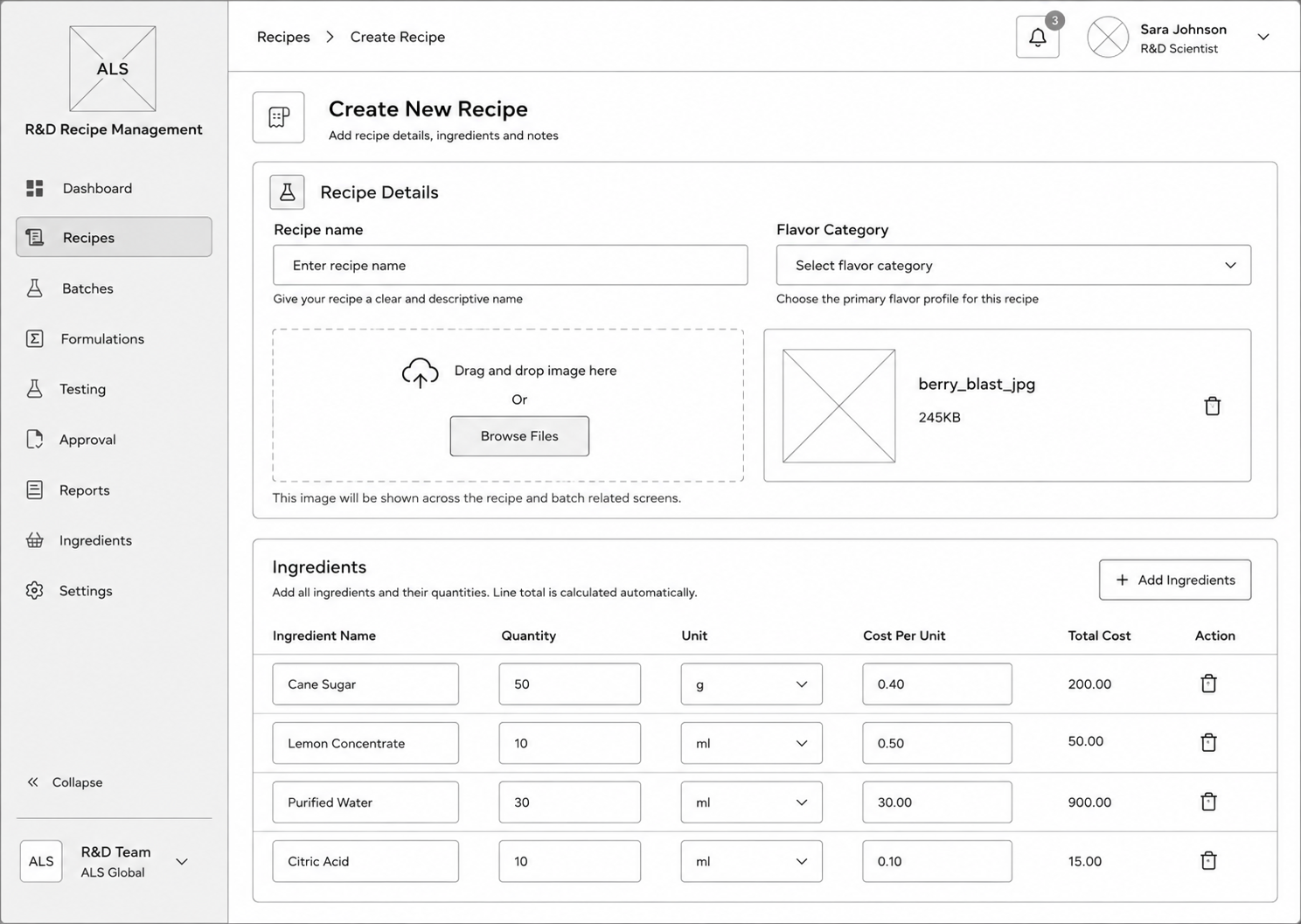
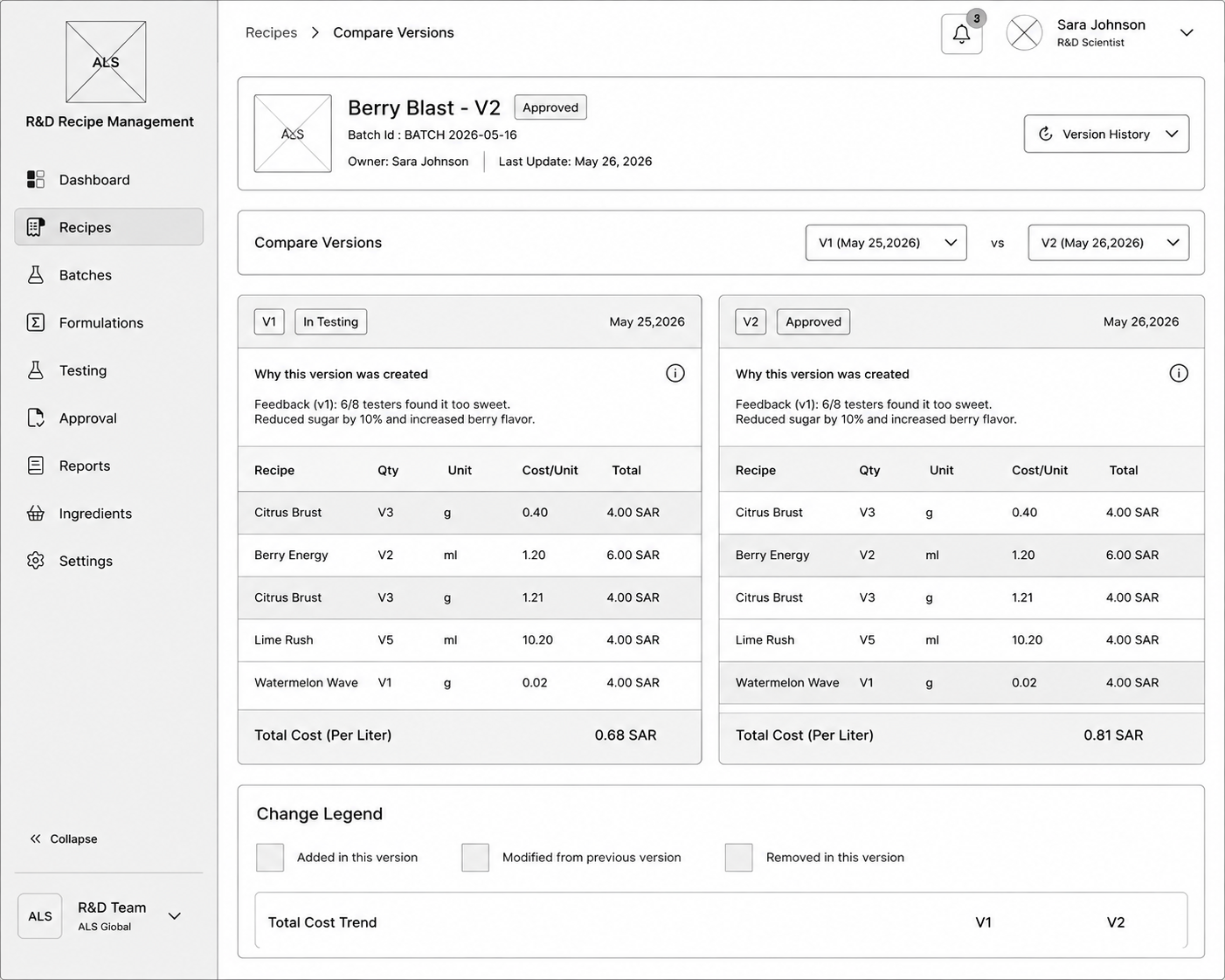
Before moving into high-fidelity designs, I explored the core product structure through low-fidelity wireframes. This helped validate screen hierarchy, information placement and user flow without focusing on visual styling.
R&D workflow overview & activity tracking.
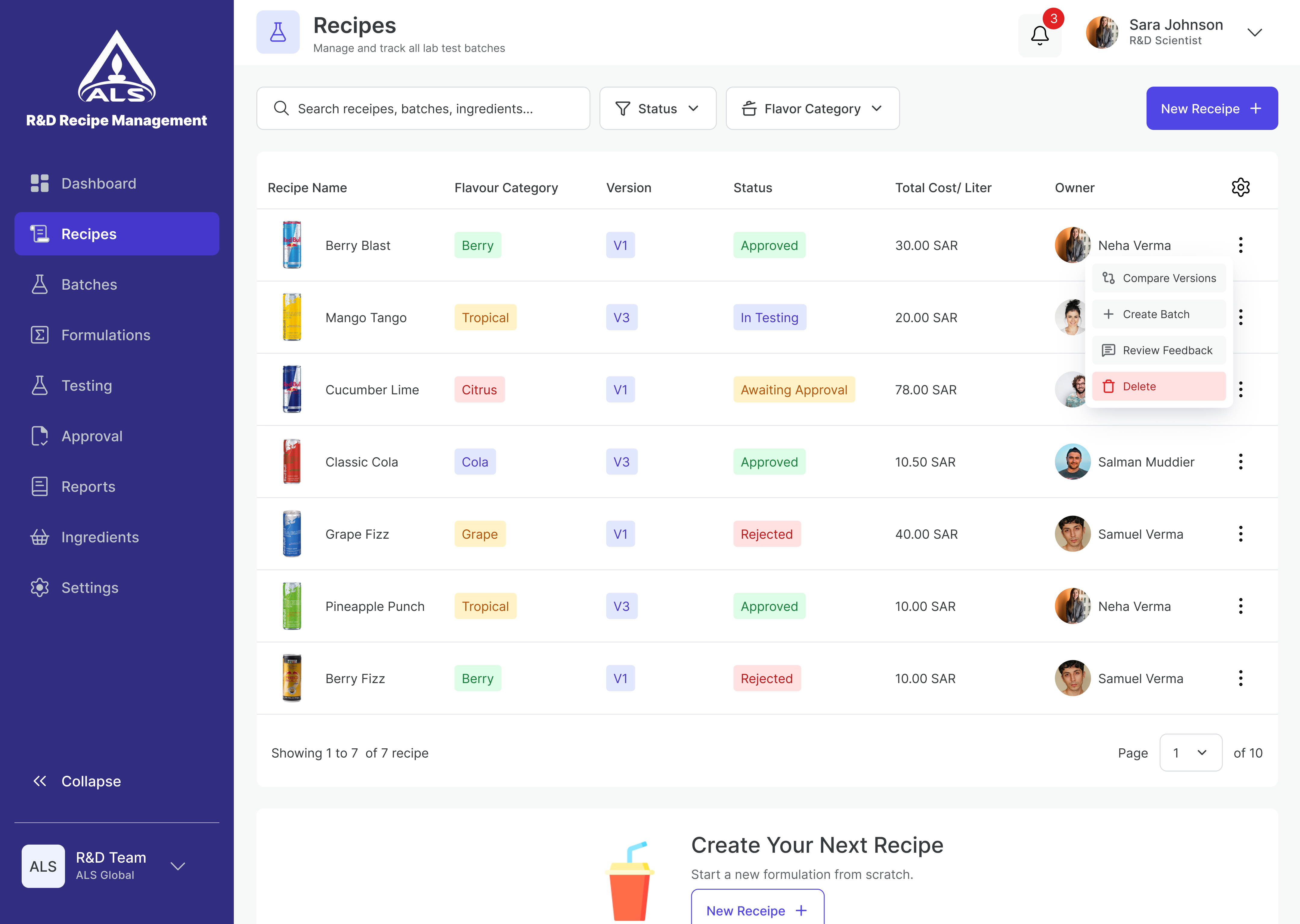
Recipe library & version management.
Recipe formulation & ingredient management.
Compare formulations & track recipe changes.
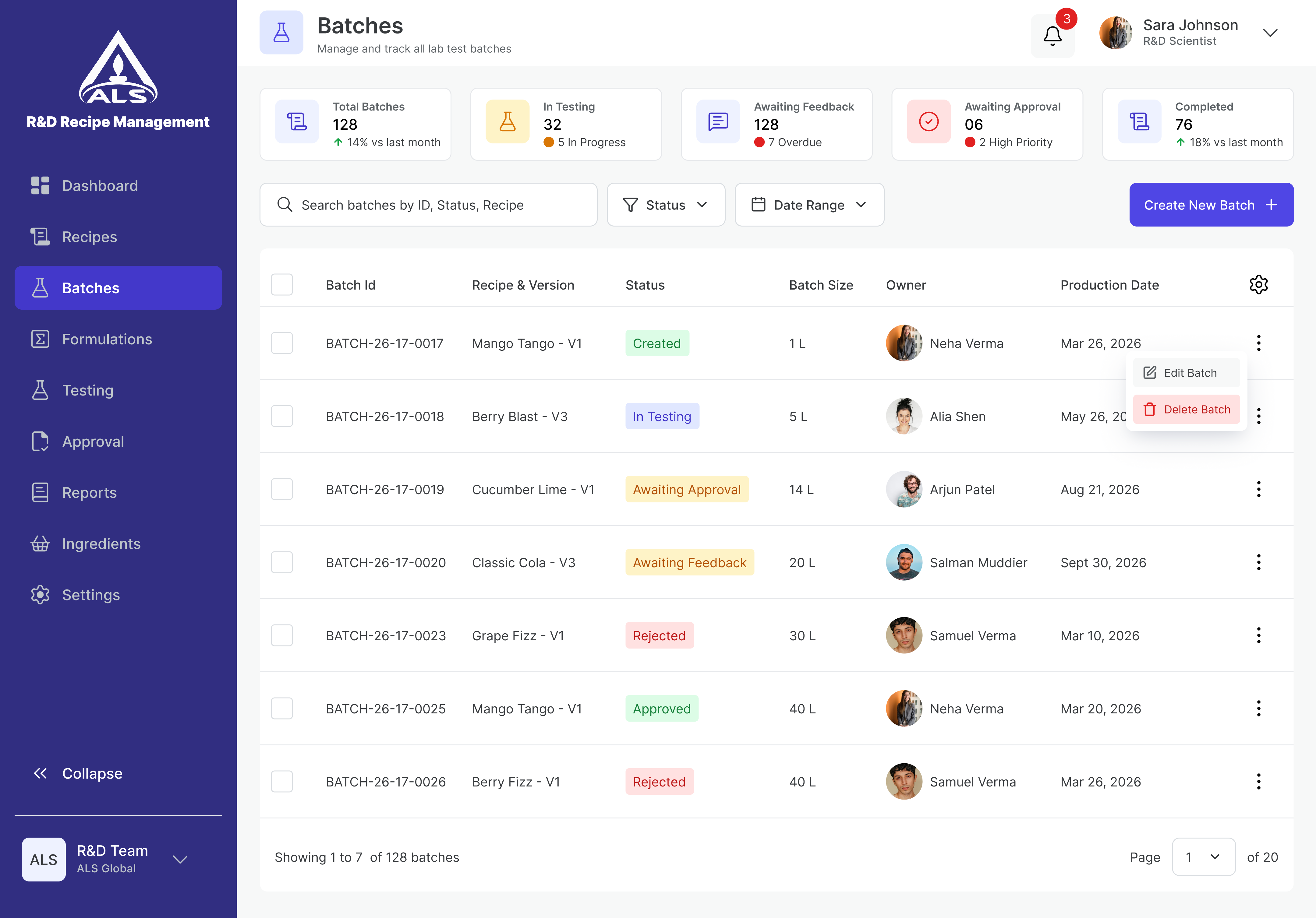
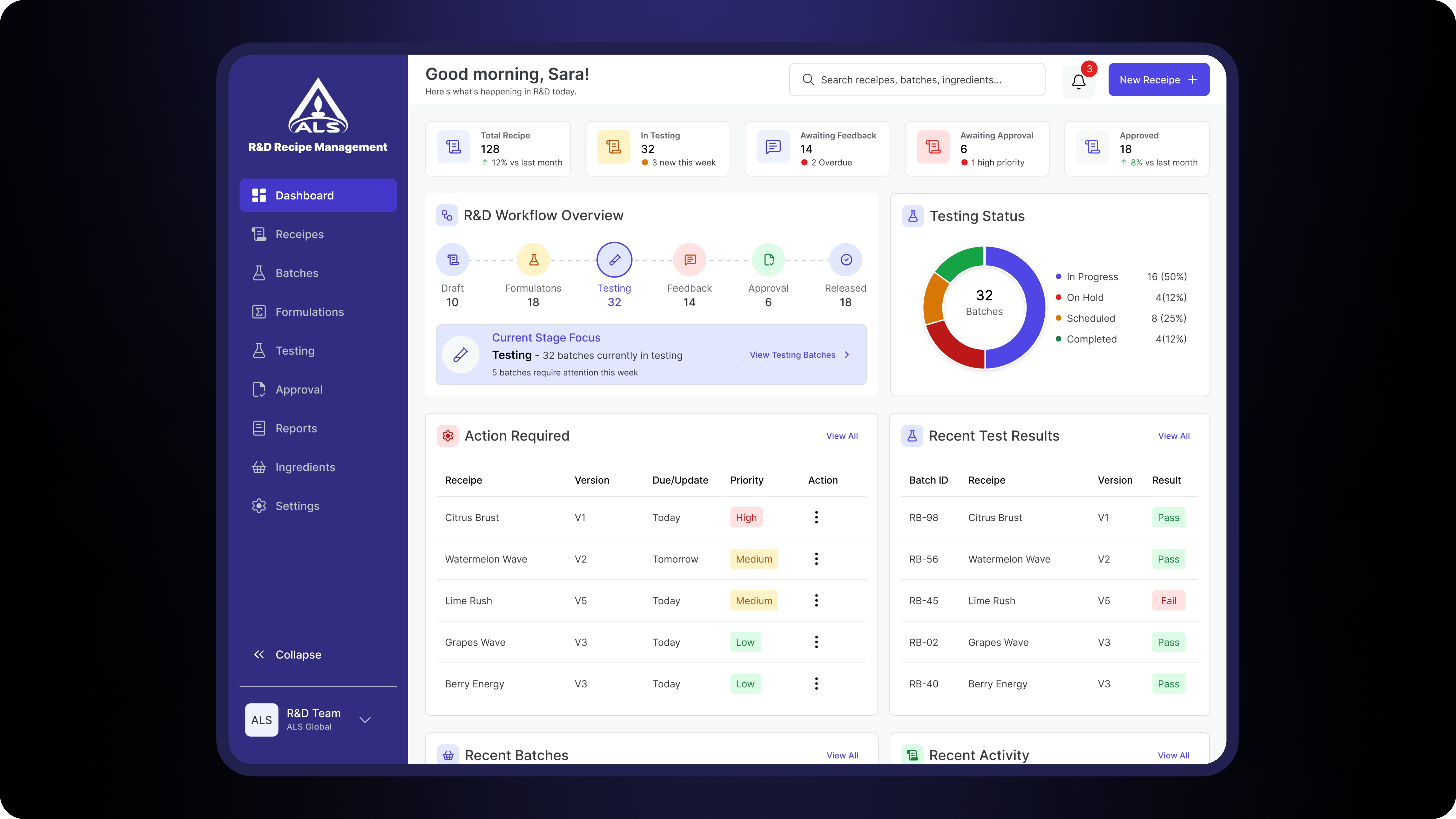
The final interfaces were designed to simplify accounting workflows while maintaining scalability and consistency across the platform.
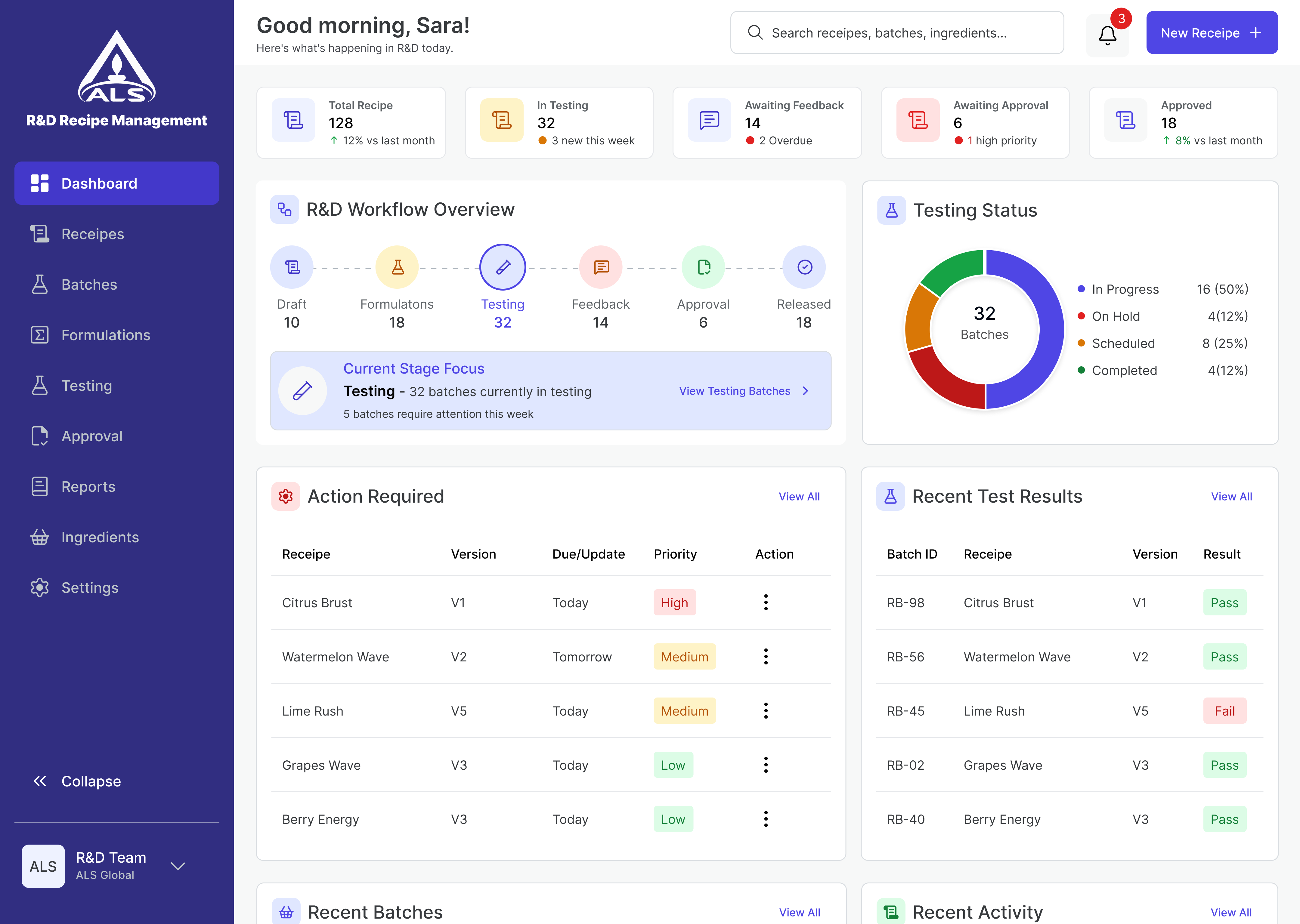
Provide R&D teams with a quick overview of recipe development, testing progress, pending feedback, approvals, and recent activities in one place.
Provide R&D teams with a centralized view to manage recipe versions, monitor development status, and quickly start the next workflow.
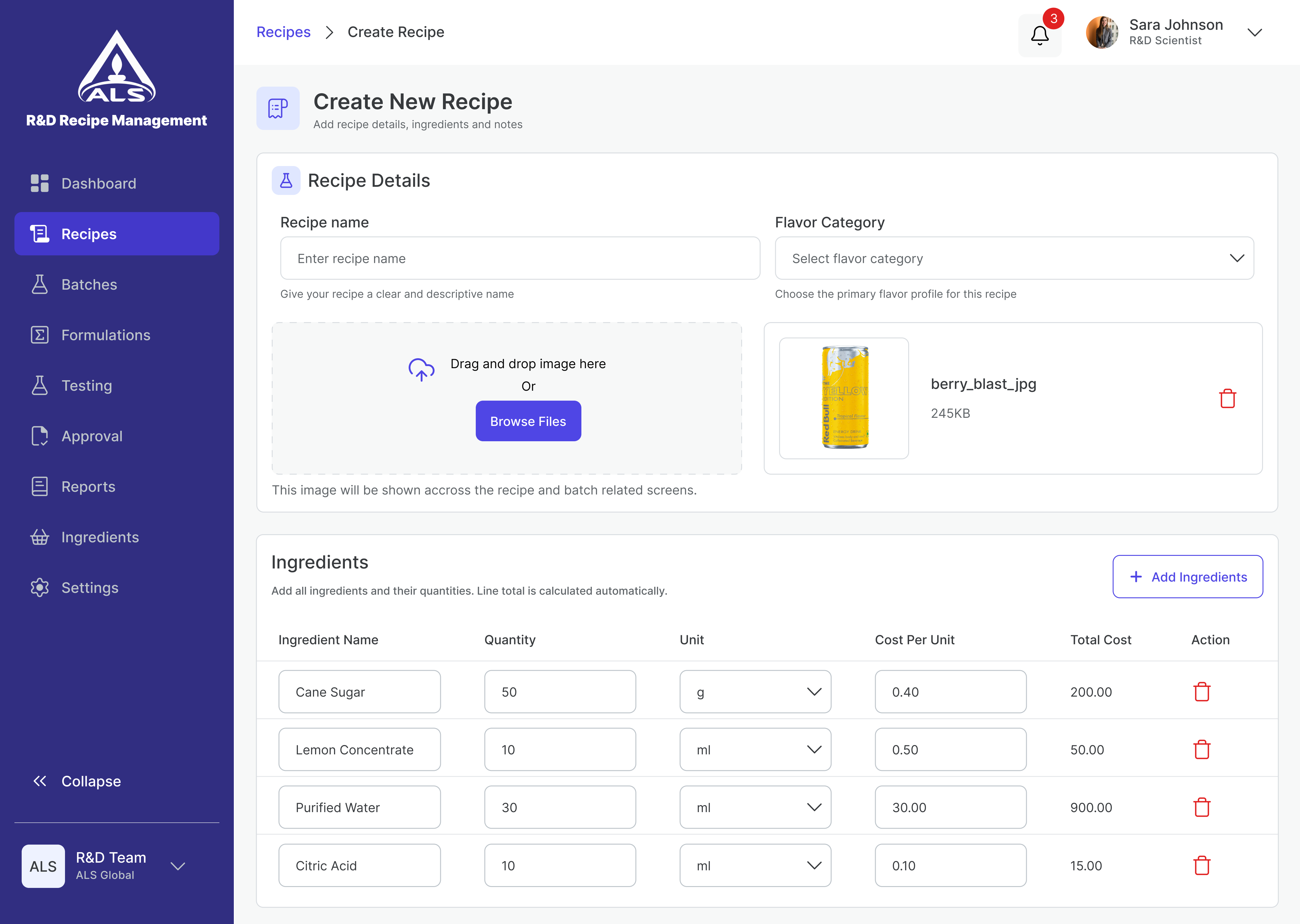
Allow R&D scientists to create a structured recipe by defining its formulation, ingredients, product details, and development notes.
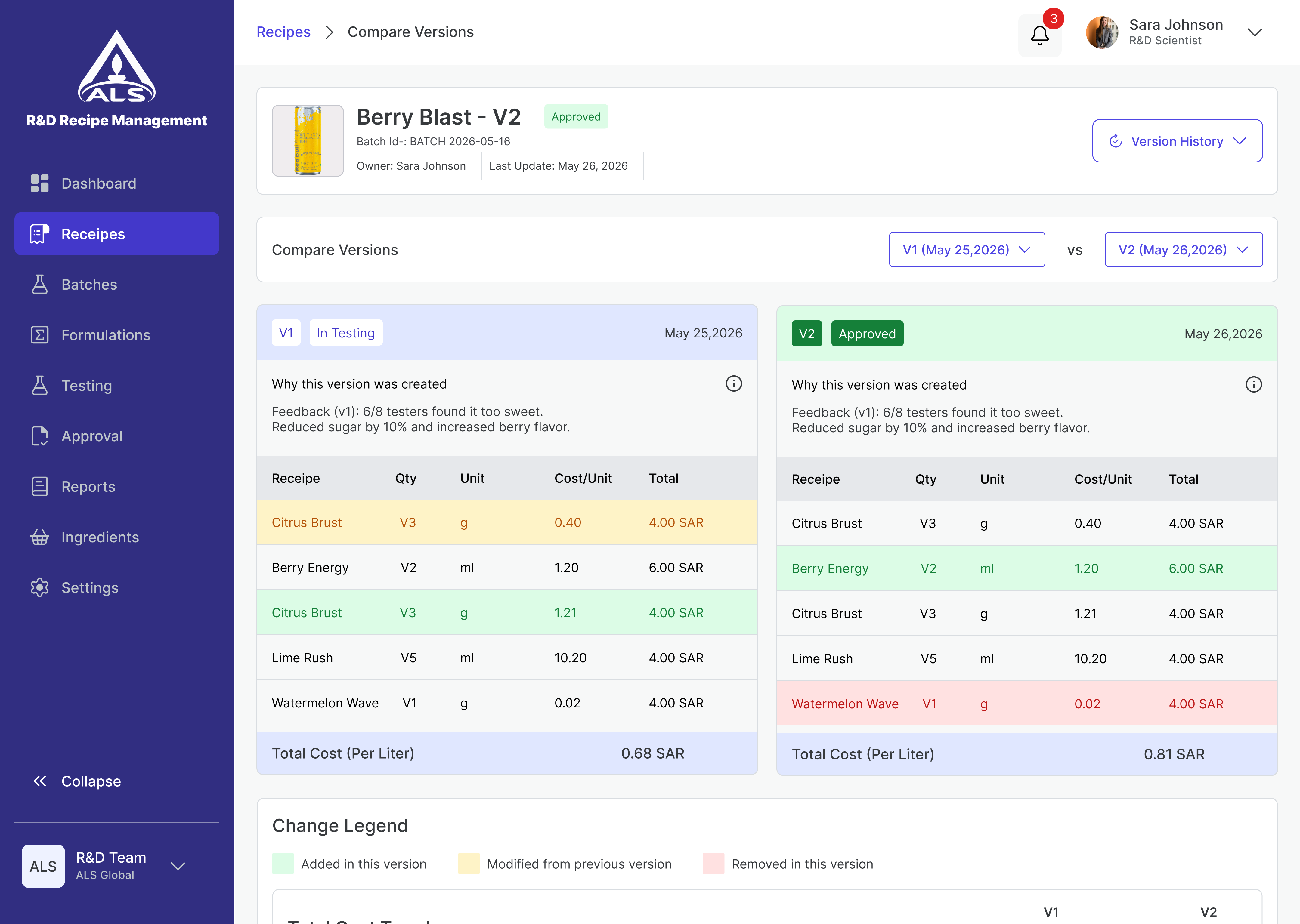
Help R&D scientists quickly identify formulation changes between recipe versions and understand how those changes affect cost and development decisions.
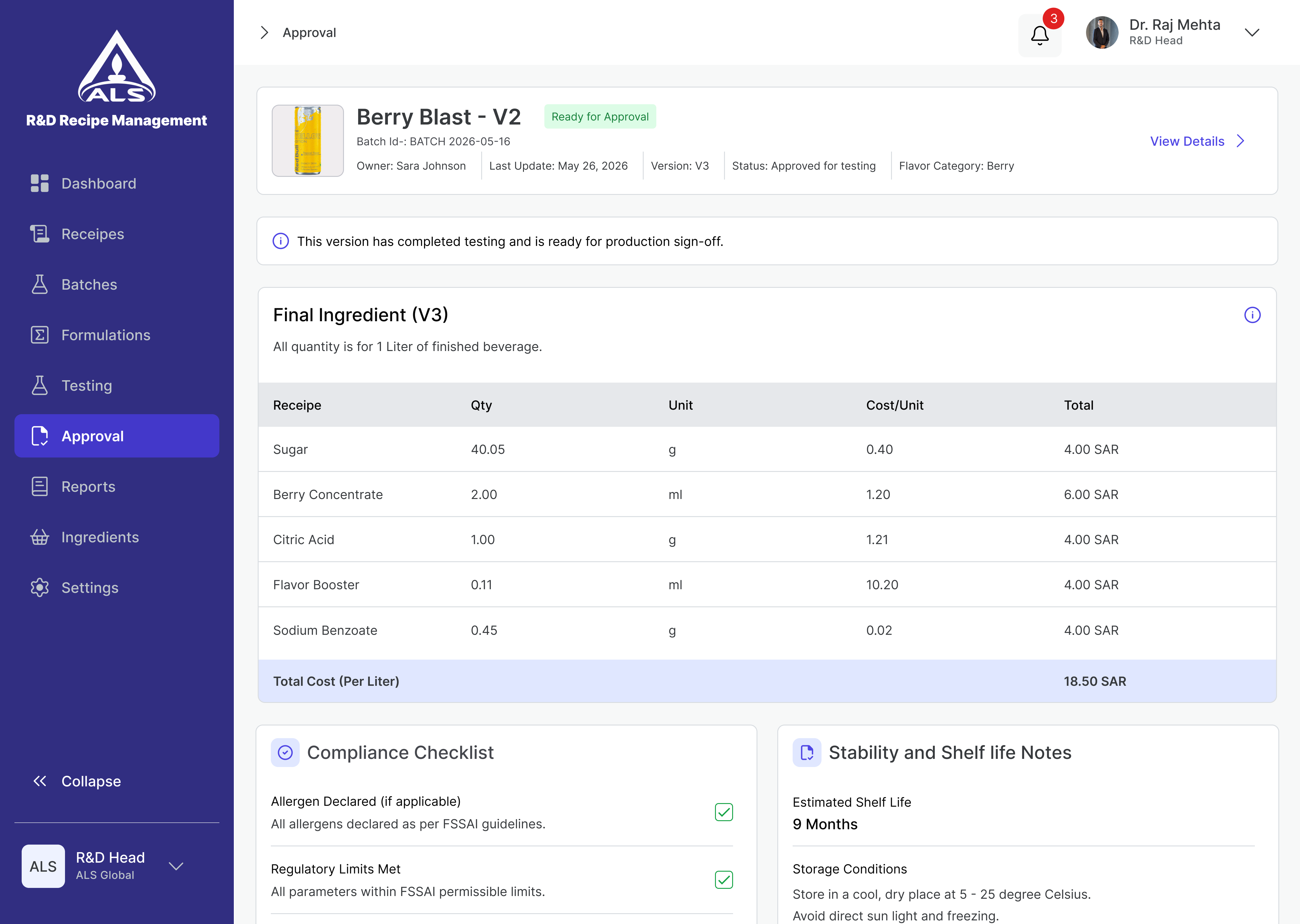
Provide the R&D Head with a complete review of a tested recipe before making the final production decision.
After validating the R&D workflow in Figma, the interfaces were translated into a scalable Angular application using reusable components and a consistent design system.

Semantic structure for accessible, responsive, and well-organized enterprise interfaces.

Reusable styles, variables, and utility patterns for maintaining consistent UI across the application.
Component-based architecture for building scalable enterprise applications.
Key outcomes achieved through streamlined R&D workflows, clearer information architecture, and reusable UI patterns.
Structured recipe creation, testing, feedback, and approval workflows reduce unnecessary navigation and manual effort.
Recipe versioning and side-by-side comparisons make formulation changes easier to review and track.
Role-based workflows connect R&D scientists, testers, and approvers throughout the product development cycle.
Designing an R&D workflow taught me how important it is to balance usability, traceability, and business processes.
Mapping the journey from recipe creation to testing, feedback, and approval helped me design around real user tasks rather than individual screens.
R&D scientists, testers, and approvers have different responsibilities, so the interface should surface the information and actions relevant to each role.
Version comparisons, formulation details, test results, and compliance data need clear hierarchy so users can make decisions confidently.
In an enterprise R&D product, recording changes, feedback, approvals, and version history is just as important as completing the primary task.